Thriv Blog
When Gatekeepers Lose Control
How digitally enabled work markets shift power, reshape trust, and force old and new models to adapt.
S.N.Prakash | March 25, 2026 | 7 min
Take taxis. For years, the model was local, licensed, controlled, sometimes unionised, and often not very customer friendly. Then Uber arrived. It changed discovery, changed pricing, made it easier for new drivers to enter, made it easier for customers to get rides, and changed who controlled the customer relationship.
The story is bigger than taxis.
Our way of working evolves. Gradually and then suddenly. Not because the old ways were useless. They existed for a reason and worked. But over time, if improvements are not brought in, old ways of working can become slower, more expensive, less efficient, and sometimes irrelevant. Then change is no longer a choice. It is forced.
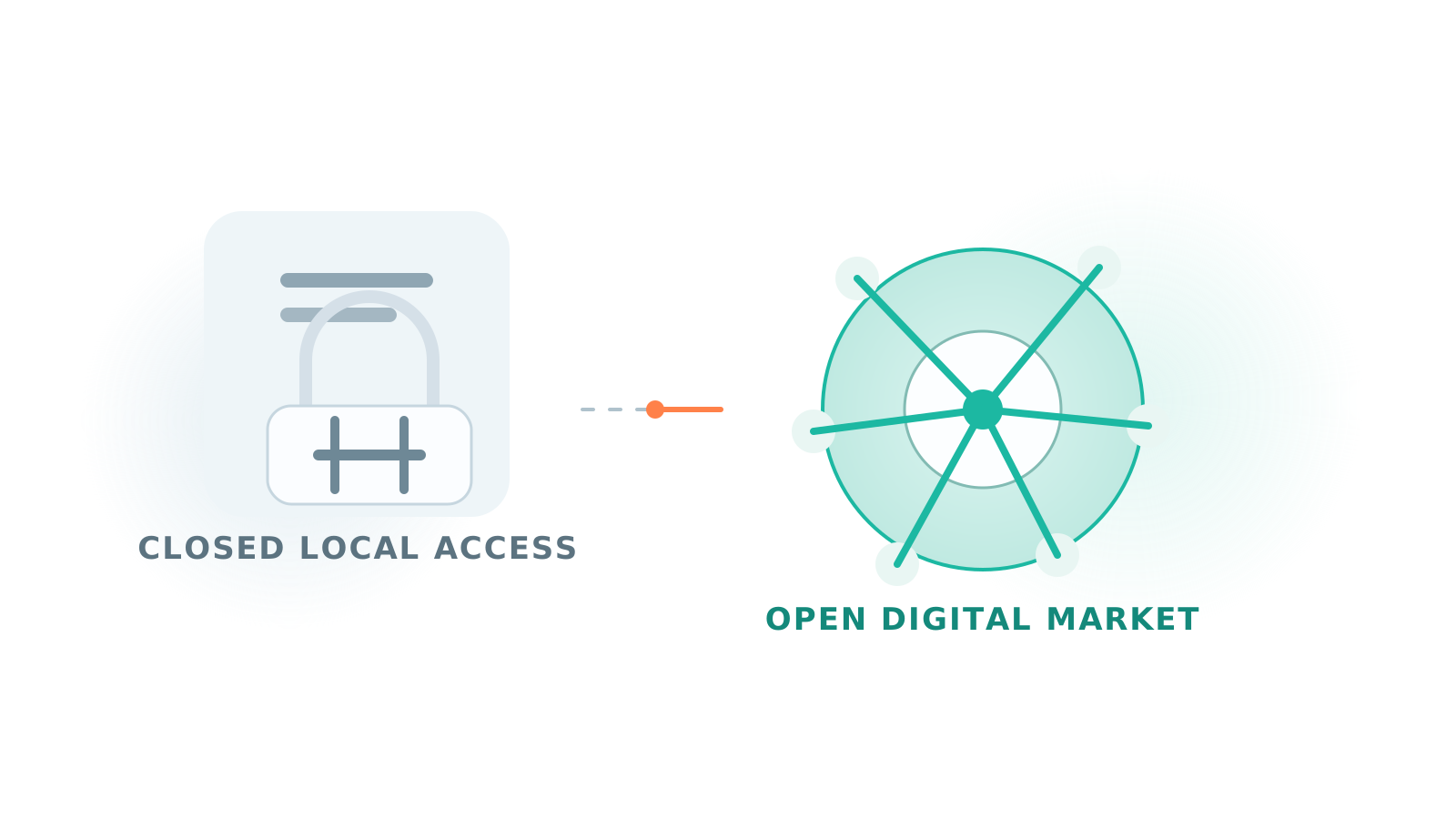
The upside of adapting to the right change is more opportunity and more resilience. The downside is that stability can take a hit, and cost dynamics can shift.
How we work and how we do business can change in a planned way for many reasons: cost reduction, new markets, better speed, better leverage. Or it can be forced by events: pandemics, wars, inflation, policy shifts, supply shocks, and technology shifts. Either way, change comes.
What Digitally Enabled Work Markets Are
This is where digitally enabled work markets grew fast.
A parallel market emerged where Amazon, Uber, Upwork, Fiverr, DoorDash, and others became a direct channel to meet customer needs. These channels reduced old layers and weakened traditional gatekeepers. They created a more open, reputation-driven, and borderless market that runs on trust signals like ratings, delivery history, value, speed, and responsiveness.
The gains were not only speed and access. There was wider reach, lower search cost, faster hiring, easier entry for new workers, and more options for customers. Businesses that adopted these models could cut costs, move faster, and expand with less fixed structure.
That does not mean the old system disappeared.
Taxi systems did not vanish because Uber appeared. They had to digitise, improve dispatch, improve convenience, and become more transparent. Retail did not disappear because Amazon grew. Old retailers adapted with digital storefronts, better logistics, marketplace participation, and hybrid models. The story is not old versus new. It is adaptation, overlap, and a shift in who gains power.
Why Digitally Enabled Work Markets Grew So Fast
These markets grew fast because they solved two old problems at once: discovery and trust.
Earlier, finding the right worker or the right customer took time. It depended on local networks, agencies, referrals, or luck. Digital marketplaces compressed that process into one system: search, compare, review, message, hire.
They also grew because they matched the direction of the world. Smartphones spread. Online payments improved. Remote work became normal. Global talent pools became easier to access. Businesses were under pressure to stay lean. COVID did not create this shift. It accelerated what was already happening. Technology adoption did the rest.
The boom became visible from around 2013, with Uber becoming one of the strongest symbols of the shift. Then COVID in 2020 pushed this economy even further. It is not just tech work. It is rides, delivery, design, tutoring, cleaning, virtual assistance, staffing, and specialist services. The market widened because access widened.
How Large the Market Has Become
This is no longer edge behavior. It is full mainstream.
Business Research Insights puts the platform-mediated gig economy at USD 582.2 billion in 2025. The World Bank estimates there are 154 million to 435 million online gig workers worldwide, equal to roughly 4.4 to 12.5 percent of the global labor force. In the United States, McKinsey's American Opportunity Survey found that 36 percent of employed respondents did some form of independent work. Depending on definition, broader estimates run much higher, which is exactly the point: this is no longer a niche side market.
Who Shaped Digitally Enabled Work Markets
Not all digitally enabled work markets are the same. Some are built around freelance and project work like Upwork and Fiverr. Some are built around transport and delivery like Uber and DoorDash. Some are built around local services, home tasks, tutoring, staffing, or specialist work.
Different sectors, same pattern. Reduce friction. Bring demand and supply into one place. Make matching easier. Once that happens at scale, the marketplace is no longer just a tool. It becomes part of the market itself.
It is understandable that the numbers vary. A company like Costco can report its business with precision. A fragmented neighbourhood economy cannot. This market is much closer to the second in many parts of the world. It is spread across sectors, countries, and informal layers.
Still, directionally, the trend is clear. Gig, freelance, and platform-mediated work have grown much faster than many traditional channels over the last decade.
How Digitally Enabled Work Markets Make Money
These markets do not just connect demand and supply. They monetise the connection through commissions, service fees, subscriptions, and visibility products.
Once discovery happens through the marketplace, access itself becomes a business. Work flows through the system, and the marketplace earns from that flow.
Why Users Moved to Digitally Enabled Work Markets
For customers, these markets reduce search cost, speed up hiring, widen the pool, and create comparability. For workers, they create access to demand that would otherwise remain out of reach. Geography matters less. Starting becomes easier. Entry barriers come down.
That is why these systems scaled. They solved a real pain. They made access faster, broader, and more immediate than many traditional channels.
What Users Give Up in Digitally Enabled Work Markets
But the model also has trade-offs.
For workers, income can become less stable. Ratings matter. Reviews matter. Visibility matters. Platform rules matter. If those things move against you, access to work can change quickly.
For customers, choice increases, but so does noise. More supply does not always mean better fit. More convenience does not always mean more control. Trust is often pushed into ratings and platform signals, and those signals are not always complete.
Why Regulation Is Catching Up
As these markets grew, they stopped being small experiments at the edge. They started shaping earnings, pricing, visibility, and working conditions for millions of people.
That is why law and regulation started catching up.
The questions are now bigger. Who is really independent? What is transparent pricing? What can marketplaces claim about earnings? How much control can an algorithm exercise before it starts looking like management? These are no longer side questions. They are central questions.
Governments, regulators, and courts are paying more attention for that reason. This is no longer only a story of innovation. It is also a story of power, accountability, and rules.
Where Digitally Enabled Work Markets Go Next
The next phase will not be the end of these markets. The real question is what kind of systems survive, what kind of trade-offs users accept, and how old and new models continue to adapt to each other.
Some systems will go deeper into scale, control, and monetisation. Others will have to become clearer, cleaner, and more defensible. Users are learning too. They want speed and access, but they also want more transparency, better economics, and fewer hidden costs.
That is where Thriv should be positioned: a place to move from discovery to direct action without extra gatekeepers, with open routes to business discovery, expert discovery, and live opportunities.
The first wave proved that digital matching works. The next phase will be judged on how fair, transparent, and useful these markets remain as they mature.
That is the bigger story. Not replacement. Not disruption for its own sake. Adaptation, overlap, and a new balance of power.